
How Rotary Burr Shapes Affect Cutting Efficiency
How Rotary Burr Shapes Affect Cutting Efficiency
 2026-10-27T09:34:04-08:00
A rotary burr can remove metal efficiently when its cutting head matches the workpiece. However, even a sharp carbide burr may struggle if its shape prevents the cutting edges from reaching the intended area. Understanding how rotary burr shapes affect cutting efficiency starts with recognizing why certain profiles work better on particular surfaces.
Consider the difference between leveling a raised weld and smoothing a curved opening. Both remove metal, but each requires a different cutting motion. The shape you choose influences how the burr engages the surface and how easily you can control the cut.
Why Rotary Burr Shape Matters in Metalworking
Before selecting a rotary burr, examine the finished surface you want to achieve. A flat section requires a different cutting motion than an internal curve, especially when surrounding metal limits access.
The head’s geometry determines where the cutting teeth contact the workpiece. When the profile follows the intended surface, you can maintain a steadier cutting path without constantly adjusting the angle.
A poor match creates unnecessary work. For example, using a rounded burr to level a broad, flat section can leave uneven marks that require further smoothing.
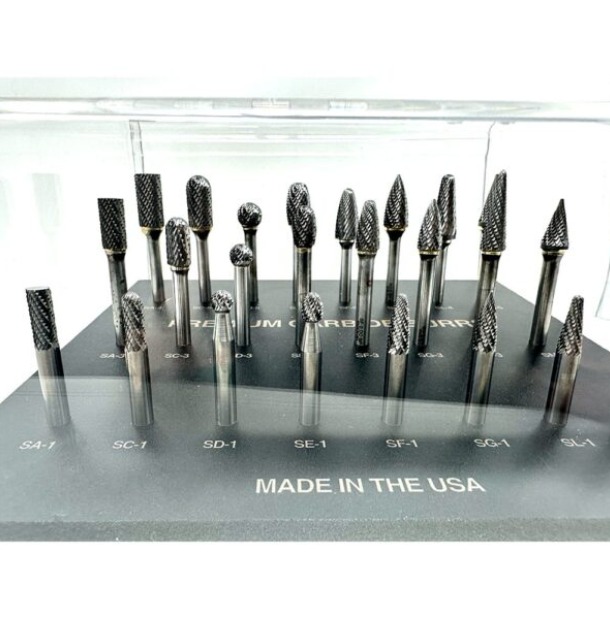
Cylindrical Burrs for Removing Raised Welds
Weld cleanup often involves removing excess metal without cutting into the surrounding surface. Cylindrical burrs suit this task because their straight sides provide an extended cutting area.
When working along a raised weld bead, you can guide the burr parallel to the surface and gradually reduce the excess material. The uniform diameter helps maintain a consistent cutting path across accessible sections.
Cylindrical burrs also work well along straight internal walls. However, their profile limits access to curved recesses, where the head may contact surrounding metal before reaching the intended area.
Some designs include end-cutting teeth for machining flat-bottomed recesses. Check the burr’s configuration before attempting an end cut.
Ball-Shaped Burrs for Rounded Openings
An internal radius presents a different challenge. A straight cutting head may contact the surrounding wall before reaching the area that needs attention.
Ball-shaped burrs use a spherical cutting surface that follows the curve as the tool changes direction. This makes them useful for smoothing rounded openings or correcting irregularities inside recessed areas.
Their shape also supports localized cutting. You can concentrate on an uneven spot and gradually blend it into the surrounding surface without removing material across a broad section.
However, a ball burr won’t produce a flat bottom. Avoid engaging too much of the head inside narrow openings, since greater contact increases cutting resistance.
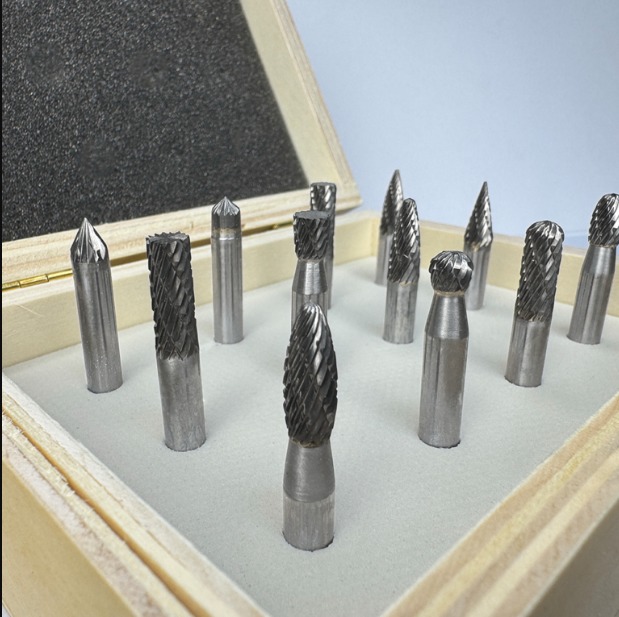
Tree-Shaped Burrs for Irregular Contours
Some workpieces have changing curves that make a constant-diameter cutting head difficult to position. Tree-shaped burrs address these areas with a body that gradually narrows toward the tip.
Rounded tree burrs work well for smoothing curved recesses. Their tapered sides allow you to adjust cutting contact as the contour becomes narrower.
Pointed tree burrs serve a different purpose. Their narrower ends can reach sharper internal transitions or grooves that a rounded tip can’t reach.
The distinction matters during detailed work. A pointed head may reach the intended corner, but its smaller cutting area requires careful handling to avoid removing excess metal.
Flame-Shaped Burrs for Extended Curves
When a workpiece has an elongated internal curve, a ball burr may require frequent repositioning. Flame-shaped burrs provide a longer, gently tapered cutting area that can follow these transitions.
Their curved sides allow gradual material removal along the head’s length. As the available space narrows, the rounded tip can reach smaller features without an abrupt change in cutting diameter.
Flame-shaped burrs work well when refining curved channels or blending adjoining surfaces. Their elongated geometry supports a continuous cutting motion along gradual contours.
Maintain controlled contact near the narrow end, where excessive pressure can make precise shaping more difficult.
Cone-Shaped Burrs for Angled Edges
Chamfering requires a consistent slope along the edge of a workpiece. Cone-shaped burrs have straight, tapered sides that help guide the cut along an angled surface.
When chamfering an opening, the burr’s taper provides a reference for the intended edge. You can gradually remove material while maintaining the cutting angle.
Cone-shaped burrs also help modify tapered openings, but the head diameter limits how deep it can enter.
Before cutting, compare the burr’s angle with the required finished profile. A mismatch may widen the opening unevenly or remove material beyond the intended edge.
How Cutting Contact Influences Efficiency
Understanding how rotary burr shapes influence cutting efficiency also involves considering how much of the cutting head engages the workpiece.
A broad cutting area can remove more material during a pass when operating conditions support the engagement. However, greater contact increases resistance, which can make the burr harder to control.
Narrower cutting heads concentrate material removal within a smaller area. They may require more passes across broad surfaces, although their size provides better access to confined features.
Other factors also influence performance:
- Head diameter: Larger diameters produce higher surface speeds at the same rotational speed.
- Tooth configuration: Cutting patterns affect chip formation and cutting behavior.
- Workpiece material: Different metals respond differently to cutting pressure and tooth geometry.
- Operating speed: Manufacturer recommendations help establish suitable cutting conditions.
Single-cut burrs typically produce longer chips and can support aggressive material removal. Double-cut designs generally break material into smaller chips, making controlled cutting easier.
Choosing a Burr That Fits the Work
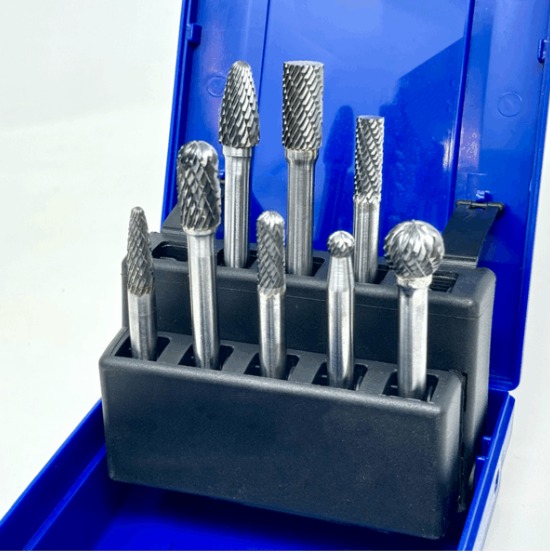
Start with the surface geometry and the amount of metal you need to remove. Broad material removal may favor a larger cutting head, while narrow features require a profile that reaches the intended area without interference.
The desired finish also matters. Removing a raised weld involves different cutting requirements than refining a small internal radius.
When comparing rotary burrs for metal, examine the head dimensions and tooth pattern alongside the shape. These characteristics influence cutting engagement and chip removal.
Consider the material as well. Aluminum can produce chips that cling to unsuitable cutting teeth, while harder metals may require different operating conditions.
Finally, verify shank compatibility and follow the manufacturer’s recommended operating speeds.
Choose the Shape That Matches Your Cutting Needs
Efficient metal removal starts with understanding the surface you’re working on. Selecting a rotary burr that matches its contours helps reduce unnecessary cutting and makes the finished profile easier to control.
At Drill Bit Warehouse, we carry solid carbide rotary burrs for metalworking applications. Browse our selection or contact us for help choosing a burr that fits your work.