


How To Choose the Right Drill Bit for Sheet Metal
How To Choose the Right Drill Bit for Sheet Metal
 2025-10-20T06:43:40-08:00
Working with sheet metal demands accuracy. A smooth drill hole ensures reliable fastening and a polished appearance, whereas a rough, uneven entryway weakens the material and gives an unprofessional appearance. The tool you select makes all the difference. The right drill bit creates a clean entry and exit point without warping or damaging the surrounding metal. The wrong bit can create burrs or even tear the material.
Knowing how to choose the right drill bit for sheet metal can be the difference between a smooth project and a frustrating one. Whether you’re a homeowner, contractor, or purchasing agent, understanding which drill bit to use will save you time, money, and materials.
Understanding Drill Bit Materials
The material of your drill bit is crucial for its performance. It dictates its hardness, ability to withstand heat, and overall lifespan. When drilling into sheet metal, you need a bit engineered to cut efficiently without quickly dulling from the intense friction and heat generated. Choosing the wrong material can lead to poor results, damaged bits, and wasted time.
Different materials offer various benefits, making some more suitable for specific applications than others. Let’s explore the common types of drill bit materials and their ideal uses for sheet metal:
High-Speed Steel (HSS)
High-speed steel (HSS) bits work well for drilling into soft metals, such as aluminum. They offer a good balance of cost and performance for occasional or light-duty tasks. However, when drilling harder metals or for extended periods, they can dull quickly due to heat buildup.
Black Oxide-Coated HSS
These HSS bits have a black oxide coating that increases heat resistance and reduces friction. This treatment also helps the bit resist corrosion. Black oxide-coated bits last longer than standard HSS bits and provide a smoother drilling experience when working with various types of sheet metal.
Titanium-Coated HSS
Titanium nitride (TiN) coating gives these bits a characteristic gold color. This hard ceramic coating reduces friction, allowing for higher drilling speeds. Titanium-coated bits dissipate heat more effectively, which extends their lifespan and makes them suitable for drilling harder metals, such as stainless steel.
Cobalt Drill Bits
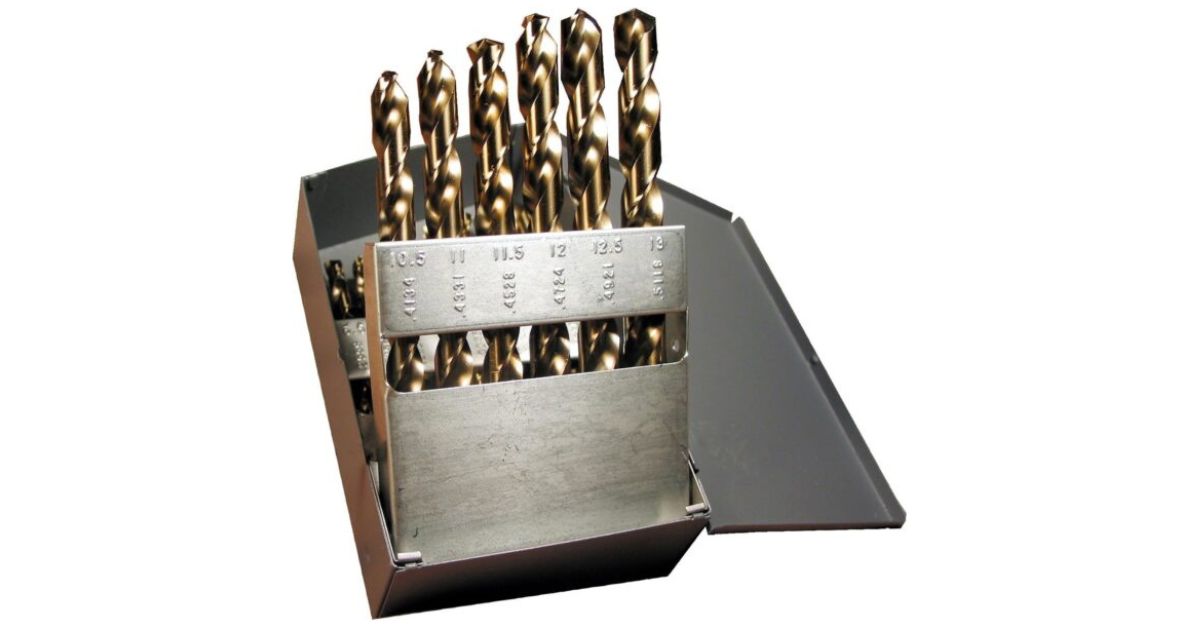
Cobalt drill bits are crafted from a specialized steel alloy that typically contains 5% to 8% cobalt. This robust composition makes them highly resistant to heat and abrasion, ideal for tackling the toughest materials. They can effectively drill through hard alloys and stainless steel without dulling their cutting edges.
They offer superior performance and durability for demanding projects. A cobalt metal drill bit set provides a versatile range of sizes for various professional and DIY applications.

Key Drill Bit Types for Sheet Metal
Beyond the material itself, the shape and design of the drill bit affect how well it performs on thin metal surfaces. When drilling sheet metal, choosing the appropriate bit profile, point angle, and specific coatings can determine whether the result is a clean, precise hole or one that is jagged and damaged.
These design elements are engineered to prevent common issues, such as “walking” on the surface, burring, and overheating, which are particularly problematic when drilling through thin gauges. Understanding these nuances is crucial, not only for achieving optimal results but also for prolonging the life of your tools.
Twist Drill Bits
The most common type of drill bit, a standard twist bit, can work on sheet metal if used correctly. However, a bit with a 135-degree split point tip works better than a standard 118-degree tip. The steeper angle and split point prevent the bit from “walking” on the metal surface, requiring less force to start the hole.
Quick Tip: Using Twist Bits
- Always use a center punch to create an indentation before drilling. This gives the bit tip a starting point and prevents it from wandering.
- Start with a smaller pilot hole before using the final, larger bit. This reduces the strain on the larger bit and helps create a cleaner hole.
Step Drill Bits
Step drill bits have a cone-like shape with multiple cutting diameters, or “steps.” This design allows you to drill holes of various sizes with a single bit. Step bits excel at enlarging existing holes and drilling into thin materials, such as sheet metal. Because they cut with the side of their steps, they create smooth, burr-free holes without deforming the metal.
Spot Weld Drill Bits
Specifically designed for auto body work, spot weld drill bits are used to remove spot welds that join sheet metal panels. They have a centering spur and sharp cutting flutes that cleanly slice through the weld without drilling through the underlying panel. Their precise design makes them a valuable tool for automotive repair and metal fabrication.

Factors to Consider When Selecting Your Drill Bit
Making the correct choice comes down to evaluating your specific project needs. Understanding how to choose the right drill bit for sheet metal involves matching the bit to the material and desired outcome.
Type and Thickness of Sheet Metal
Different metals have different hardness levels.
- Soft Metals (Aluminum, Copper): HSS or black oxide-coated bits work well.
- Harder Metals (Steel, Stainless Steel): Cobalt or titanium-coated bits have the necessary heat resistance and durability.
The thickness of the metal also matters. For thin-gauge sheets, a step drill bit offers excellent control and prevents warping. For thicker sheets, a sharp cobalt twist bit creates a precise hole.
Hole Size and Finish
Consider the final purpose of the hole. If you need a clean, finished hole of a specific size, a step drill bit provides excellent results. If you need to drill many holes of the same diameter, a high-quality twist bit might offer more efficiency. For applications requiring a countersink, specialized countersink bits create a beveled opening for flush screw heads.
Drilling Speed and Lubrication
Drilling into metal generates a lot of heat, which can damage both the bit and the workpiece.
- Drilling Speed: Use slower speeds for harder metals to reduce heat buildup. Faster speeds can work for softer metals like aluminum.
- Lubrication: Applying cutting fluid or a specialized lubricant dissipates heat, reduces friction, and extends the life of your drill bit. It also helps produce a cleaner cut.
Find the Right Tools for the Job
Selecting the appropriate drill bit for sheet metal prevents damage to your materials and ensures a clean, professional result. By considering the metal type, bit material, and bit design, you can confidently tackle any project. Whether you are a homeowner working on a DIY project or a contractor handling a large-scale job, the right bit saves time and improves the quality of your work.
For demanding applications that require drilling through tough metals, explore our selection of high-performance bits. A quality cobalt metal drill bit set from Drill Bit Warehouse will equip you for any challenge.