


How To Set Up and Operate a Wet Diamond Core Drill
How To Set Up and Operate a Wet Diamond Core Drill
 2026-02-19T13:14:42-08:00
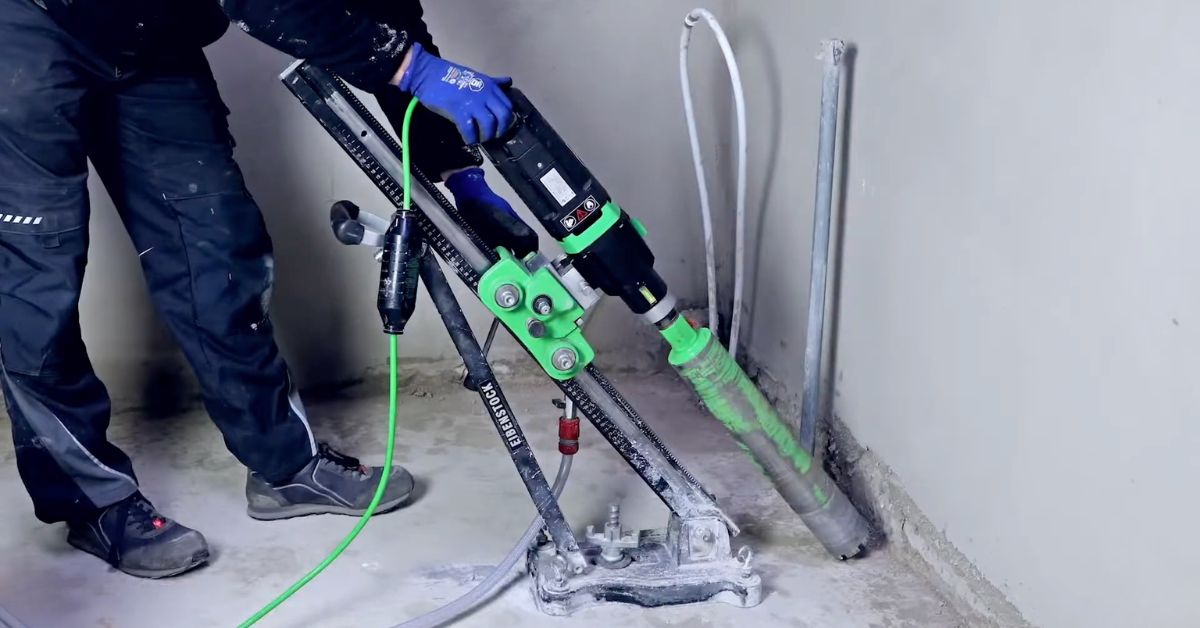
A wet diamond core drill enables controlled cuts through concrete and masonry. Achieving precise results depends on proper setup, accurate alignment, and careful technique rather than brute force. The way the drill is prepared and used influences the quality of the cut, the smoothness of the edges, and the longevity of the equipment. A careful and disciplined setup ensures consistent results from the initial contact to the finished cut.
When operators adopt a structured approach, drilling advances with consistent resistance and produces cleaner results across different surface densities. To minimize corrective work and avoid putting unnecessary stress on drilling parts, here is how to set up and use a wet diamond core drill.
Equipment Preparation Before Drilling
Preparation establishes drilling accuracy and workflow efficiency. Stage the drill motor, stand, water source, and power supply near the work area. Adequate spacing supports clear movement, stable footing, and an unobstructed line of sight during operation. Organized staging also shortens setup time and reduces handling during repositioning.
Surface evaluation follows staging. Mark the bore location using fixed reference points that remain visible under water flow. Confirm clearance behind the drilling plane to avoid contact with embedded utilities or structural elements. This sequence limits repositioning once drilling begins, ensuring uninterrupted progress and consistent tracking.
Material condition also influences preparation. Dense aggregate, cured concrete, and layered masonry respond differently during initial contact. Anticipating changes in surface resistance helps operators moderate feed pressure early in the cut.
Mounting the Core Drill Stand
A secure stand limits lateral movement during drilling. Anchor the base with mechanical fasteners or a vacuum system suited to surface conditions. Multi-axis leveling supports straight tracking and uniform diamond segment engagement as depth increases. Minor deviations at the base compound as drilling progresses, making early alignment essential.
After anchoring, adjust carriage height and feed travel. Smooth movement along the column allows consistent pressure control throughout the cut. Resistance during travel signals misalignment; therefore, correcting it before power engagement prevents tracking errors and uneven wear. Feed handles should move freely without binding or slack.
Mounting stability also influences operator control. A rigid setup allows gradual pressure changes without vibration, which protects both the bit and the motor during extended drilling cycles.

Water Supply and Flow Control
Water regulates heat and clears debris from the cutting path. Connect the supply line to a controlled source that supports steady delivery without pressure fluctuations. Consistent flow stabilizes the cutting temperature and limits friction buildup at the segment edge, thereby preserving cutting efficiency over longer runs.
Position the valve within reach of the operator for immediate adjustment. Limited water raises friction and accelerates wear. Excess flow reduces visibility and complicates slurry control. Balanced delivery maintains cutting efficiency while preserving surface clarity around the bore.
Water distribution at the entry point also matters. Even coverage across the segment face promotes uniform wear, whereas uneven flow concentrates heat locally. Adjusting flow early in the cut supports consistent engagement.
Power Connection and Safety Checks
Confirm voltage compatibility between the drill motor and power source before connection. Ground fault protection adds electrical control during wet operation. Route cables away from water lines and moving components to reduce exposure and interference. Secure routing also limits snagging during feed adjustments.
Cycle the motor at low load before drilling. Smooth rotation and consistent sound indicate mechanical readiness. Any vibration, hesitation, or irregular noise warrants inspection before surface contact, as early detection prevents operational interruption and component damage.
Control interfaces deserve attention during checks. Verify switch response, feed engagement, and emergency shutoff access before drilling. Familiarity with controls supports quick response if resistance changes unexpectedly.
Selecting the Right Core Bit
Bit selection determines cutting rate, finish quality, and service life. Material hardness, aggregate composition, and reinforcement density guide this choice. On reinforced concrete applications, wet diamond core bits support controlled penetration under continuous water flow and steady feed pressure.
Segment height, bond type, and diameter influence how the bit responds under load. Harder materials call for softer bonds that expose fresh diamond more readily. Softer materials perform better with harder bonds that slow wear. Matching these characteristics supports consistent progress throughout the cut.
Match diameter and segment profile to drilling depth and motor capacity. Oversized bits strain components and reduce control. Undersized options complicate alignment and compromise edge quality. Proper pairing preserves balance and supports consistent advancement throughout the cut.

Drilling Technique and Feed Pressure
Bring the rotating bit into light surface contact to establish initial tracking. Gradual feed allows diamond segments to seat evenly across the material face. Excess pressure accelerates glazing, while insufficient pressure slows progress and reduces cutting efficiency.
Once the bit establishes a groove, maintain steady advancement. Sudden changes in feed disrupt segment contact and affect hole geometry. Controlled pressure changes help the bit respond naturally to aggregate variation and embedded reinforcement.
Monitor slurry during advancement. Gray slurry indicates active cutting and effective cooling. Dark or powdery discharge indicates friction buildup; adjusting feed pressure or water flow restores segment performance and surface consistency. Slurry behavior provides continuous feedback throughout the drilling cycle.
Quick operational checks during drilling:
- Maintain steady feed without forcing advancement
- Observe slurry color and texture throughout the cut
- Adjust water flow as resistance patterns shift
Managing Reinforcement and Breakthrough
Rebar engagement alters resistance patterns within the cut. Reduce feed pressure as segments contact steel to allow the diamond edges to cut through the reinforcement without shock loading. Controlled advancement protects segments and stabilizes motor load during transitions between materials.
Listen for tonal changes during reinforcement contact. A smooth change in sound indicates stable engagement, while chatter suggests excessive pressure. Responding early prevents segment damage and preserves alignment.
As the bit approaches exit, ease pressure further. Controlled breakthrough preserves edge integrity on both entry and exit surfaces. This technique limits surface spalling and maintains consistent bore geometry, which matters when sleeves, anchors, or pipe penetrations follow.
Post-Drilling Shutdown and Cleanup
Withdraw the bit while rotation continues to clear debris from the kerf. Power down before closing the water supply to limit heat concentration on stationary segments. This sequence protects segment bonding and spindle components.
Remove slurry promptly and inspect mounting hardware, bit segments, and feed mechanisms for wear or loosening. Routine inspection prepares the system for subsequent use and supports longer service intervals across repeated operations. Storage in a clean, dry area further preserves the components’ condition.
Cleaning the stand rails and feed surfaces prevents buildup that affects movement during future setups. Attention at shutdown reduces preparation time on the next job.
Consistent Results Through Structured Wet Coring
Precision coring relies on careful setup and precise execution. Each step, from alignment to feed control and water management, is connected. Properly setting up and operating a wet diamond core drill is key to producing clean holes, meeting deadlines, and minimizing mechanical stress, especially when operators adhere to a disciplined process.