
Long Reach Concrete Drilling System – Drill Bit
Price range: $129.84 through $269.11
Long Reach Concrete Drill Bit System
Made in USA
Call with Questions: 800-350-TOOL
Long Concrete Drill Bit System for Deep Holes. USA Made
The DBW-SYS Deep Drilling System allows you to drill very deep holes in Concrete up to 12′ or longer. The strongest screw together bit system in the world. USA MADE
The Strongest Screw Together Bit System in the World.
3/4″ to 2″ Diameter Threaded Parabolic 12″ Drill Bits
Pick the size Parabolic Drill, Pick your Adaptor and Add Extensions.
Everyone Loves this System!
Questions? Call us at 1-800-350-8665 Ext 100
A regular long concrete drill bit stops at its own length. This one doesn’t. Every bit in the system has a threaded arbor, so you build the drill string to the depth of the hole: bit, then 18″ extensions, then the adaptor that fits your rotary hammer. Need another foot and a half? Pull out, thread in one more extension, and keep going. One bit, one adaptor and a stack of extensions take the place of a rack of extra-long bits you would only use once.
How the Long Reach Concrete Drilling System Works
The system has three parts that screw together:
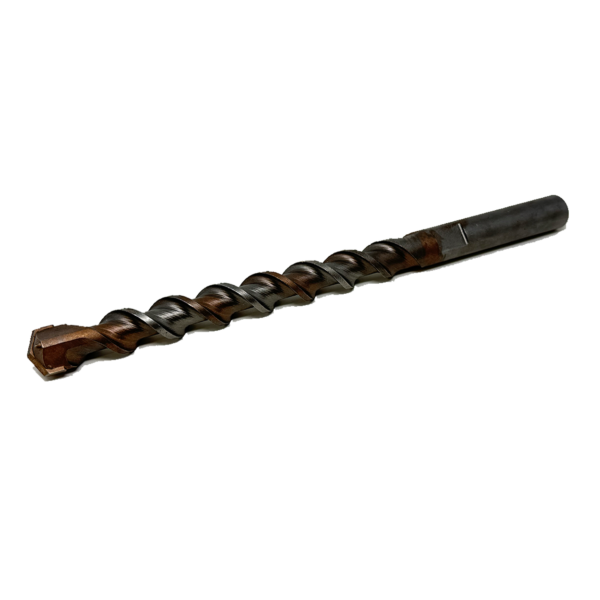
- The drill bit (this page): a 12″ carbide masonry bit with a 10″ parabolic flute and a threaded arbor. Pick the diameter you need from 3/4″ to 2″.
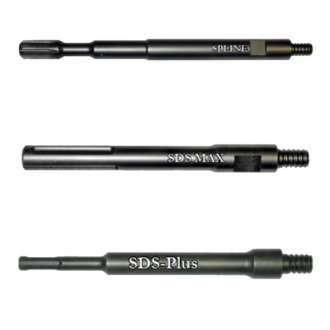
- The adaptor: connects the system to your rotary hammer. Choose SDS-Plus, SDS-Max or Spline Drive. These adaptors only work with the Long Reach Concrete Drilling System.
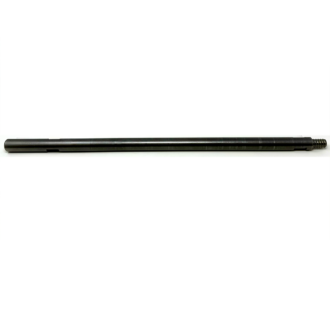
- The extensions: 18″ threaded extensions that go between the bit and the adaptor. Bits up to 1″ use the 18″ extension for drilling up to 1″ diameter. Bits from 1-1/8″ to 2″ use the 18″ (0.937″) extension for drilling above 1″.
Step by step
- Start with the bit and adaptor only. Screw the bit and adaptor together, lock it in your rotary hammer and drill the first 10″. This short, stiff setup collars the hole straight, and the rest of the hole follows it.
- Add the first extension. When the flute is buried, pull the bit all the way out, unthread the adaptor, thread an 18″ extension between the bit and the adaptor, and run it back into the hole.
- Keep adding as you go. Each extension adds about 18″ of reach. Add them one at a time as the hole gets deeper, not all at once. A short string is stiffer, hits harder and drills straighter.
- Clear the hole every time you add a section. Pull out, let the dust come with it, then go back in.
- Take it apart when you’re done. Unthread the sections, wipe the threads clean and store the parts straight.
How many extensions? Plan on the 12″ bit plus 18″ for every extension. Four extensions gets you to about 7 feet. Reaching 12 feet takes roughly 8 extensions.
What to Expect When Drilling Deep Holes in Concrete
Deep holes in concrete are hard work for any bit. Here is what to plan for, straight up:
- The first foot is the fastest. Drilling slows down as the hole gets deeper. A longer string soaks up some of the hammer’s blow, and you spend more time pulling out to clear dust. Budget more time for the last few feet than the first few.
- Dust has to come out the top. The bit has a 10″ flute and the extensions are smooth rods, so past the flute nothing carries the dust up the hole for you. Pull the bit out often. If you don’t, dust packs around the string and the bit binds.
- Long holes wander a little. Every hand-held long drill drifts some over a long run. Hard aggregate, voids and steel push the bit off line. Start square and keep the hammer lined up with the hole, and it will track well. On a hole several feet long, don’t expect it to come out to the fraction of an inch on the far side.
- Rebar stops a carbide masonry bit. You’ll feel it stop making progress and hear a metal grinding sound. Don’t keep hammering on it. That is how carbide tips chip.
- The carbide wears. Concrete is abrasive, and the tip wears with every foot drilled, faster in hard aggregate. A worn tip drills slower and drills a slightly smaller hole. The extensions and adaptor are reusable; the bit is the part that wears out.
- Big bits need a big hammer. A 2″ hole 10 feet deep is a heavy-hammer job. Expect a lot of torque if the bit catches, so hold on with both hands.
What You Need
- A rotary hammer. SDS-Plus, SDS-Max or spline drive. Not a regular hammer drill with a chuck. For 1″ and larger, and for anything past a few feet, an SDS-Max or spline hammer is the right call. SDS-Plus hammers are better suited to the smaller sizes and shorter reach.
- One adaptor that matches your hammer.
- Enough extensions for the depth, in the right style for your bit diameter (see the chart).
- Dust protection. Concrete dust contains silica. Wear a respirator, eye and hearing protection, and use a vacuum at the hole when you can.
- A rebar cutter if there is any chance of hitting steel.
Specifications
| Type | Threaded carbide masonry drill bit, parabolic flute |
|---|---|
| Diameters | 3/4″, 7/8″, 1″, 1-1/8″, 1-1/4″, 1-1/2″, 2″ |
| Overall length | 12″ |
| Flute length | 10″ |
| Connection | Threaded arbor |
| Adaptors | SDS-Plus, SDS-Max, Spline (sold separately) |
| Extensions | 18″ threaded, two styles by bit diameter (sold separately) |
| Reach | Up to 12′ or longer with extensions |
| Drive | Rotary hammer through the adaptor |
| Made in | USA |
Long Concrete Drill Bit Size Chart
| Size | Decimal | Overall | Flute | Extension to Use |
|---|---|---|---|---|
| 3/4″ | .750 | 12″ | 10″ | up to 1″ |
| 7/8″ | .875 | 12″ | 10″ | up to 1″ |
| 1″ | 1.000 | 12″ | 10″ | up to 1″ |
| 1-1/8″ | 1.125 | 12″ | 10″ | 0.937″ (above 1″) |
| 1-1/4″ | 1.250 | 12″ | 10″ | 0.937″ (above 1″) |
| 1-1/2″ | 1.500 | 12″ | 10″ | 0.937″ (above 1″) |
| 2″ | 2.000 | 12″ | 10″ | 0.937″ (above 1″) |
Bit prices are on the size dropdown above. Adaptors and extensions are sold separately.
Applications
- Through-wall holes for conduit, pipe and cable in thick foundation walls and footings
- Poured concrete walls, retaining walls and slabs
- Stacked block, brick and stone walls
- Deep anchor, rod and dowel holes
- Drain and weep holes through thick masonry
- Jobs where a core rig won’t fit or won’t reach
Tips for Drilling a Deep Hole in Concrete
- Know what’s in the wall before you drill. Scan for rebar, conduit and pipe. Never drill a post-tensioned slab until the cables are located.
- Get the start right. Mark the hole, then sight the hammer from the side and from above before you pull the trigger. The first 10″ sets the line for the whole hole.
- Thread every joint up snug. Seat each joint fully and keep the threads clean. A loose joint takes the hammer blow on the threads instead of the bit. Check the joints each time you pull out.
- Let the hammer do the work. Steady, moderate pressure in line with the hole. Leaning on it doesn’t drill faster. It bends the string and wanders the hole. Keep the speed down on long setups, and slower still on the big sizes.
- Pull out often. Back the bit out every few inches to clear dust, and more often as you go deeper. Keep it turning on the way out so the flute carries dust with it.
- Hit steel? Stop. Pull the bit, switch to a rebar cutter in rotation only to get through the bar, then go back to the masonry bit to finish.
- Don’t steer with the hammer. Pushing sideways to correct a drifting hole bends the extensions. Back out and restart in line instead.
- Use the side handle. A long string can bind in the hole, and when it does the hammer wants to spin. Keep both hands on it.
FAQ
How deep can you drill with this long concrete drill bit?
Up to 12′ or longer. Start with the 12″ bit and add 18″ extensions as the hole gets deeper. It takes roughly 8 extensions to reach 12 feet.
Can you put an extension on a concrete drill bit?
On this system, yes. That is what it is built for. The bits have a threaded arbor, and the 18″ extensions thread in between the bit and the adaptor. Standard SDS-Plus and SDS-Max bits don’t take these extensions, and these adaptors and extensions only work with this system.
How do you drill a deep hole in concrete?
Start short and straight, then add length. Drill the first 10″ with just the bit and adaptor, then add one extension at a time. Pull out often to clear dust, keep the pressure steady and in line, and stop if you hit rebar.
What drill do I need?
A rotary hammer with an SDS-Plus, SDS-Max or spline drive, plus the matching adaptor. For 1″ and larger bits or deep holes, use an SDS-Max or spline hammer.
Which extension do I need?
It goes by bit diameter. For 3/4″, 7/8″ and 1″ bits, use the 18″ extension for drilling up to 1″ diameter. For 1-1/8″, 1-1/4″, 1-1/2″ and 2″ bits, use the 18″ (0.937″) extension.
Will the hole come out perfectly straight?
A long hole drilled by hand will drift some. Start square, keep the hammer in line, add extensions one at a time and don’t force it, and the hole will track well. For tight tolerances on the far side, measure and plan for some drift.
Can it drill through rebar?
No. It is a carbide masonry bit. If you hit steel, stop, switch to a rebar cutter in rotation only, then come back with the masonry bit.
Do the adaptor and extensions come with the bit?
No. This page is for the drill bit. The adaptor and extensions are sold separately, so you buy one adaptor for your hammer and as many extensions as the job needs.
The Long Reach Concrete Drilling System from DrillBitWarehouse.com. Just a BIT more twisted.
Call 800-350-8665
| Size: | 3/4" Diameter x 12" Long x 10" Flute Length Threaded Arbor, 7/8" Diameter x 12" Long x 10" Flute Length Threaded Arbor, 1" Diameter x 12" Long x 10" Flute Length Threaded Arbor, 1-1/8" Diameter x 12" Long x 10" Flute Length Threaded Arbor, 1-1/4" Diameter x 12" Long x 10" Flute Length Threaded Arbor, 1-1/2" Diameter x 12" Long x 10" Flute Length Threaded Arbor, 2" Diameter x 12" Long x 10" Flute Length Threaded Arbor |
|---|
You may also like…
-
Long Reach Concrete Drilling System – Extension
Price range: $59.90 through $69.90 This product has multiple variants. The options may be chosen on the product page -
Long Reach Concrete Drilling System – Adapter
Price range: $78.86 through $110.54 This product has multiple variants. The options may be chosen on the product page