1/4″ PENETRATOR DRILL BIT FOR CONCRETE AND STEEL/REBAR
SDS PLUS PENETRATOR – Quad Carbide Tipped
Use the drop down menu to select Length!
Drills concrete and steel decking, rebar at the same time.
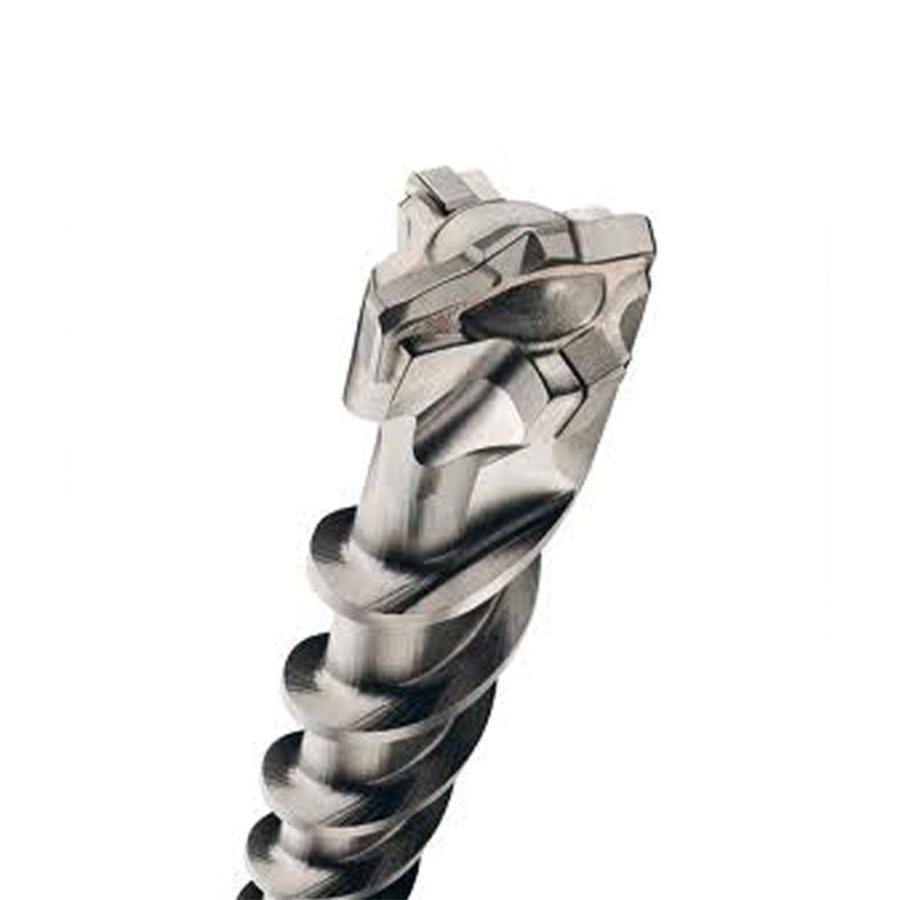
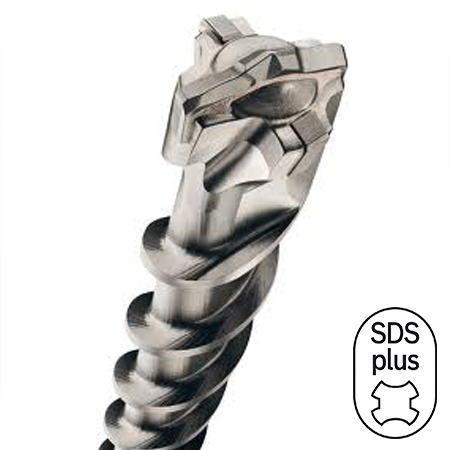
SDS-PLUS Penetrator™ Quad Carbide Tipped Drill Bit is engineered for uninterrupted drilling through reinforced concrete, rebar, and steel decking. Built in Germany with laser-welded micro-grain carbide, this bit is designed for contractors who do not stop when they hit steel.
Quad carbide cross-head geometry keeps the bit centered and prevents walking when starting holes. Flank-side reinforcements protect the cutting edges during rebar contact, reducing chipping and extending service life. When you encounter embedded steel, apply firm, steady pressure and continue drilling without changing bits.
High-helix spiral flute entrance geometry evacuates dust quickly to maintain cutting speed and reduce heat buildup. The sub-trac spiral flute design helps prevent vacuum blow-back and binding in deeper holes, especially during anchor installations.
The multi-cutter head configuration significantly reduces arm-hand vibration compared to conventional two-cutter SDS bits, improving control and operator comfort on demanding jobsites.
Designed for professional use in:
- Reinforced concrete
- Structural concrete
- Steel decking over concrete
- Masonry and stone
- Mechanical, electrical, and plumbing anchor installs
Use in an SDS-Plus rotary hammer in hammer drill mode. Always maintain proper footing and follow all safety precautions when operating power equipment.
Made in Germany.
Use SDS-Plus rotary hammer in hammer drill mode. When encountering rebar/steel apply firm steady pressure.
Made in Germany.
Most concrete bits quit when they hit rebar. This 1/4 inch drill bit for concrete and rebar keeps going. A standard two-cutter masonry bit is built to crush concrete. When it lands on steel, it binds, chips a carbide corner or just sits there and spins. The Penetrator has four carbide cutting edges on a solid cross head, so it can work its way through embedded rebar and steel decking in hammer mode, with no bit change and no trip to the truck for a rebar cutter.
How a Rebar Drill Bit Works
- In concrete: the rotary hammer drives the carbide head into the concrete thousands of times a minute while it turns. The blows break up the concrete and the turning sweeps the dust into the flute. Four cutters spread that work out, so the head stays centered and cuts a round hole.
- When it hits steel: steel doesn’t shatter the way concrete does. A two-cutter bit has one long chisel edge that catches on the bar and stalls. The four-edge cross head works the steel in small bites as it turns, and the flank-side reinforcements back up the carbide so the edges don’t break off against the bar.
- Getting the dust out: the high-helix flute pulls concrete dust and steel grit up and out of the hole, which keeps the head cutting instead of grinding its own dust.
What to Expect When You Drill Through Rebar
This bit gets you through the steel. It doesn’t make the steel go away. Here is what it really feels like:
- Concrete goes fast. Steel goes slow. When you hit a bar, you’ll hear the sound change to a metal grind and feel progress drop way off. That’s normal. Hold firm, steady pressure and let it cut. When you break through, the speed comes back and the bit pulls into concrete again.
- Steel makes heat. A few seconds on a bar heats up the head far more than a whole hole in plain concrete. Back out now and then to clear the hole and let it cool. Never cool a hot bit with water. Cold water on hot carbide can crack it.
- Every bar uses up some of the bit. Steel wears carbide faster than concrete does. A bit that crosses rebar on every hole won’t last as long as one drilling plain concrete. When it starts drilling slow in plain concrete, the edges are worn.
- Metal deck grabs. When the bit breaks through steel decking, it can catch and twist the hammer. Keep both hands on the tool and expect it.
- It drills steel in concrete, not steel by itself. This is a hammer bit for rebar and deck embedded in or over concrete. It isn’t made for drilling steel plate, beams or angle. Use a metal drill bit for that.
- The bit can cut rebar. Whether you should is a different question. Rebar holds the structure together. Get an OK from the engineer or architect before you cut through structural steel, and never drill a post-tensioned slab until the cables are located.
1/4″ SDS-Plus Drill Bit Specifications
| Diameter |
1/4″ (.250″, 6.35 mm) |
| Shank |
SDS-PLUS |
| Head |
Quad carbide cross head (4 cutting edges) with flank-side reinforcements |
| Construction |
Laser-welded micro-grain carbide |
| Flute |
High-helix spiral with sub-trac design |
| Lengths |
2″, 4″, 6″, 8″ and 10″ length of cut |
| Drills |
Concrete, reinforced concrete, rebar, steel decking, masonry and stone |
| Use in |
SDS-Plus rotary hammer, hammer drill mode |
| Weight |
.2 lbs |
| Country of Origin |
Germany |
1/4″ Rebar Drill Bit Size Chart
Pick the length of cut that is longer than the hole you need. The extra gives the dust somewhere to go.
| Diameter |
Decimal |
Length of Cut (LOC) |
Overall Length (OAL) |
| 1/4″ |
.250″ (6.35 mm) |
2″ |
4-1/4″ |
| 1/4″ |
.250″ (6.35 mm) |
4″ |
6-1/4″ |
| 1/4″ |
.250″ (6.35 mm) |
6″ |
8-1/4″ |
| 1/4″ |
.250″ (6.35 mm) |
8″ |
10-1/4″ |
| 1/4″ |
.250″ (6.35 mm) |
10″ |
12-1/4″ |
OAL = Overall Length. LOC = Length of Cut. Prices are on the length dropdown above.
Need a different size? See the full line of drill bits for concrete and rebar, including the 3/16″, 5/16″ and 3/8″ Penetrator.
Applications
- 1/4″ wedge anchors, sleeve anchors and plastic plugs in reinforced concrete
- Conduit straps, pipe clamps, boxes and hangers for electrical, plumbing and HVAC work
- Drilling up through steel decking into the concrete above, or down through a slab into the deck
- Precast, tilt-up and poured walls where you can’t move the hole to dodge the steel
- Block, brick and stone
- Pilot holes before stepping up to a bigger bit
Tips for Drilling Through Rebar in Concrete
- Scan first. If you can miss the bar by moving the hole a little, do it. It’s faster and it saves the bit. If the hole can’t move, this bit is for that.
- Hammer drill mode, always. This bit is made to run with the hammer on, in concrete and in steel. Don’t switch to rotation only when you hit a bar.
- Firm, steady pressure on steel. Don’t lean your whole weight on it and don’t rock the hammer side to side. Hold it in line and let the cutters work.
- Clear the hole. Back out every inch or so to pull dust and steel grit out, more often in deep holes.
- Set the depth. Use the depth rod on your hammer or a piece of tape on the bit, so anchor holes come out the right depth every time.
- Clean the hole before you set an anchor. Blow out or vacuum the dust. Anchors hold best in a clean hole.
- Take care of the shank. Keep the SDS-Plus shank clean and lightly greased so it slides in the chuck and takes the full blow.
- Protect yourself. Concrete dust contains silica. Wear a respirator, eye and hearing protection, and use dust collection when you can.
FAQ
Will a concrete bit go through rebar?
A regular two-cutter concrete bit usually won’t. It binds or chips on the steel. This Penetrator is made to keep drilling through rebar and steel decking in hammer mode with firm, steady pressure. Expect it to slow down while it is in the steel.
Can you drill through rebar in concrete?
Yes, with the right bit, and with an OK from the engineer if the bar is structural. For small holes like this one, a multi-cutter carbide bit like the Penetrator does it in one pass. For bigger holes, many contractors drill to the bar, switch to a rebar cutter in rotation only, then finish with the hammer bit.
Can you hammer drill through rebar?
With this bit, yes. Keep the hammer on and hold steady pressure. A rebar cutter is the opposite. It is made for rotation only, and the hammer blow will break its teeth.
Do I need a rotary hammer?
Yes. This bit has an SDS-Plus shank, so it needs an SDS-Plus rotary hammer run in hammer drill mode. It won’t fit a regular three-jaw drill chuck.
What size drill bit for a 1/4 concrete screw?
A 1/4″ concrete screw takes a 3/16″ hole, so get the 3/16″ Penetrator for that. This 1/4″ bit is for 1/4″ wedge anchors, 1/4″ sleeve anchors and plastic plugs that call for a 1/4″ hole. Always check the size on the anchor package.
Which length do I need?
Pick a length of cut longer than the hole is deep. For short anchor holes, the 2″ or 4″ is stiffer and easier to control. Save the 8″ and 10″ for deep holes and through-holes.
Can I use it to drill steel plate or I-beams?
No. It is a hammer bit for steel in or over concrete. For plain steel, use a metal drill bit.
Questions? Call us at 1-800-350-TOOL (8665)
The 1/4″ Penetrator from DrillBitWarehouse.com. Just a BIT more twisted.