


The Evolution of High-Speed Steel Drill Bits
The Evolution of High-Speed Steel Drill Bits
 2025-12-08T07:08:12-08:00
High-speed steel drill bits have long been a staple in metalworking, construction, and general fabrication. Their ability to cut through tough materials at high speeds without losing their hardness made them a revolutionary tool. The story of their development shows a continuous push for greater efficiency, durability, and performance. Understanding the evolution of high-speed steel drill bits provides insight into the innovations that have shaped modern drilling.
The history of HSS drill bits tracks the progress of metallurgical science. From early carbon-steel tools to today’s advanced cobalt alloys and specialized coatings, each step forward brought a tool that could withstand higher temperatures and cut harder materials. These advancements allow contractors and DIYers alike to tackle more demanding projects with greater precision.
The Dawn of Modern Drilling
Before the late 19th century, drill bits were primarily made from carbon tool steels. These tools performed adequately for the time, but they had a major limitation: they generated a lot of heat. When drilling at high speeds, the friction generated can cause the carbon-steel bit to lose its temper or hardness. This meant operators had to work slowly and carefully, which limited productivity.
The need for better material became apparent as industries demanded faster manufacturing processes. This set the stage for a metallurgical breakthrough that would change drilling forever.
The Birth of High-Speed Steel
The turn of the 20th century marked a pivotal moment with the invention of high-speed steel. In 1899 and 1900, Frederick Winslow Taylor and Maunsel White, working at the Bethlehem Steel Company, conducted experiments that led to the creation of the first true HSS. Their alloy, which contained tungsten and chromium, could maintain its hardness at much higher temperatures. This property, known as red hardness, enabled machine tools to operate at speeds three times faster than before.
Key Characteristics of Early HSS:
- Tungsten: This was the primary alloying element that gave HSS its remarkable heat resistance.
- Chromium: Added for increased hardness and corrosion resistance.
- Improved Productivity: The ability to drill faster without frequent stops for cooling or sharpening drastically improved manufacturing output.
This innovation laid the groundwork for future advancements in cutting tool technology. It was a direct response to the demands of an industrializing market, and its impact was immediate and widespread.
Introduction of M-Series Alloys
While tungsten-based HSS (T-series) was effective, the search for more cost-effective and versatile alloys continued. During the 1930s, molybdenum-based high-speed steels (M-series) were developed. Molybdenum had properties similar to those of tungsten but was more abundant and less expensive. This made HSS tools more accessible to a wider range of industries and professionals.
M-series alloys, like M1 and M2, quickly became popular. M2, in particular, became the industry standard for general-purpose HSS drill bits due to its balanced combination of toughness, wear resistance, and red-hardness. The development of M-series alloys represented a practical step in making high-performance tools a common sight in workshops everywhere.

The Cobalt Advantage
The next significant leap forward in the evolution of high-speed steel drill bits came with the addition of cobalt. CHSS (High-Speed Steel), such as the M35 and M42 grades, demonstrated even greater heat and wear resistance than standard steels. This enhanced durability allowed them to maintain their hardness at elevated temperatures during cutting operations.
Consequently, they became suitable for drilling into tougher, harder, and more abrasive materials, such as stainless steel, cast iron, titanium alloys, and other difficult-to-machine metals. These properties made HSS tools particularly valuable in industrial applications where precision and longevity are essential.
The addition of cobalt increases the red-hardness of the steel, allowing the drill bit to maintain a sharp cutting edge at higher temperatures. This results in longer tool life and better performance in demanding applications. For professionals working with difficult metals, HSS drill bits for metal containing cobalt have become the go-to choice for reliable, efficient drilling. Today, M42, with its 8% cobalt content, is widely recognized for its superior performance in high-production environments.
The Impact of Advanced Coatings
The performance of HSS drill bits was further improved with the development of surface coatings. These thin, hard layers are applied to the drill bit to reduce friction, increase surface hardness, and improve chip flow. Different coatings offer distinct benefits, allowing users to select a bit for specific materials and applications.
Common HSS Drill Bit Coatings:
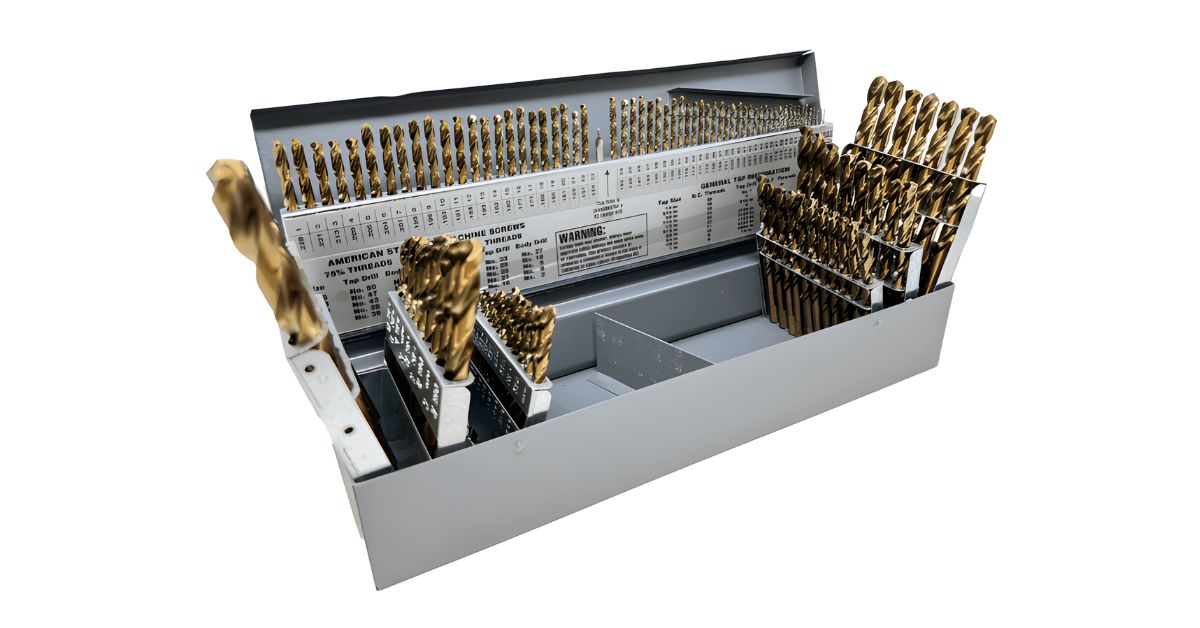
- Titanium Nitride (TiN): A gold-colored, general-purpose coating that increases hardness and provides a low-friction surface. It extends tool life in many applications.
- Titanium Carbonitride (TiCN): Harder than TiN, this violet-gray coating offers excellent wear resistance, making it suitable for cutting abrasive materials.
- Titanium Aluminum Nitride (TiAlN): This high-performance coating creates a layer of aluminum oxide at high temperatures, which acts as a thermal barrier. It excels in high-heat applications and when drilling without coolant.
- Black Oxide: A more basic surface treatment that helps retain cutting fluid and resist corrosion. It provides a modest improvement in tool life compared to uncoated bits.
The application of these coatings allows a standard HSS drill bit to perform at a higher level, bridging the gap between standard HSS and more expensive solid carbide tools.
Modern Innovations and What Comes Next
High-speed steel continues to be a relevant and widely used material for drill bits. Its combination of toughness and cost-effectiveness makes it a practical choice for a broad range of drilling tasks. Modern manufacturing processes, including improved heat treatments and precision grinding, continue to refine the performance of HSS tools.
Looking ahead, we can expect to see further developments in alloy compositions and coating technologies. New material science will likely produce drill bits that are even more durable, heat-resistant, and capable of cutting through the next generation of advanced materials.
The Enduring Legacy of HSS
The journey of the HSS drill bit from its inception to its current form is a story of continuous improvement. Each step, from the initial discovery of tungsten steel to the application of advanced nano-coatings, has pushed the boundaries of what is possible in drilling technology.
These tools have helped build our modern world, and they continue to be a dependable choice for professionals and hobbyists. For high-quality cutting tools that you can rely on, explore the wide selection of HSS drill bits at Drill Bit Warehouse.