
Are you looking for high-performing rotary burrs with excellent deburring to create unique drilling profiles? Here are the different types of rotary burrs and when to use them.
Carbide rotary burrs are often used for shaping, cutting, grinding, removing sharp edges, and deburring. They perform well on multiple materials, including acrylics, steel, cast iron, aluminum, fiberglass, and plastics. Rotary burrs have long lifespans without breaking or chipping.
While single-cut burrs are used for deburring and cleaning ferrous metals, double-cut burrs contain two flutes, often referred to as a diamond-cut bit. As a result, rotary burrs fit many applications, such as tool making, engineering, metalwork, and welding.
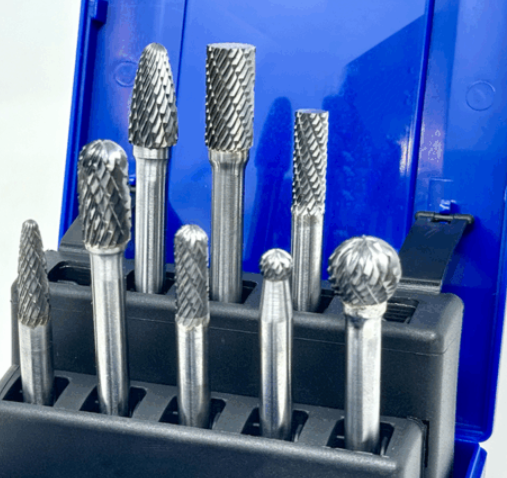
Let’s explore the types of rotary burrs and their uses for drilling applications. While they all perform drilling purposes, each shape creates different cuts and gets into many nooks and crannies, creating different profiles. Tree rotary burrs round off edges and make concave cuts; the pointed end helps users access hard-to-reach places and sharply-angled contours.
Spherical ball burrs and tree burrs serve unique purposes. The ball burr creates concave cuts in various materials and hollows out areas and shapes. Many stone carvers and metal engravers prefer ball burr rotary bits for intricate carving in hobby drills, high-speed handpieces, and micromotor tools.
Inverted cone burrs are used as excavating burs, best suited for removing material from plastic, stainless steel, and metals. Their double-cut style consists of rows of cutting teeth in double-intersecting directions for a rougher finish and provides rapid material removal in tough applications.
When you choose a cylinder burr, you have a couple of options. An end-cut cylinder with a cutting edge on the end provides a contoured finish, while a cylinder burr without an end cut (flat on the end with no cutting edge) provides a contoured finish and right-angle corners.
Lastly, you can choose a round or ball-nose cylinder-shaped burr with a rounded head. A cylinder burr is preferred for shaping, carving, grinding, and setting for metals, stone, bone, and plastics.
DrillBitWarehouse gives customers high-quality drill bits and cutting tools at favorable prices. Whether you’re a hobbyist or work for a large company, we provide stellar quality tools with friendly customer service. Consider our rotary burrs for removing sharp edges and excess deburring materials with super-clean applications. Contact us today with any questions about our drill bits.
Share this article