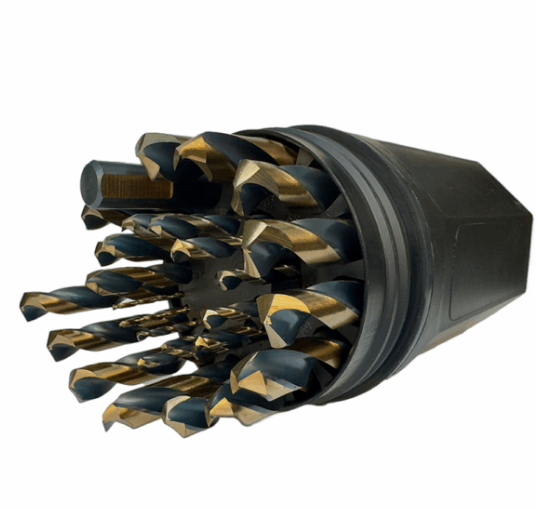
Every workshop has different drilling requirements, and no single drill bit set will cover them all. A bit that works well in mild steel may struggle with stainless steel, while a standard-length drill may lack the rigidity needed for accurate holes.
Understanding the essential drill bit sets every workshop should have starts with the materials you work with and the drilling you perform. Cutting material, bit length, and diameter range all influence how a drill performs.
Here are eight drill bit set options worth considering when building or expanding your workshop’s collection.
High-speed steel (HSS) drill bits are a dependable starting point for general metalworking. They handle common materials such as mild steel and aluminum without requiring the specialized properties of more expensive cutting alloys.
Their composition helps the cutting edges maintain hardness as drilling temperatures increase. However, excessive heat can still shorten their service life, particularly when operators use speeds that don’t match the material.
A high-speed steel drill bit set provides a useful range of diameters for maintenance work and routine fabrication. Having common sizes available also makes it easier to move between different hole requirements.
For workshops that primarily handle softer metals, HSS offers dependable performance without unnecessary specialization.
Some metals resist cutting more than ordinary mild steel, placing greater demands on the drill’s cutting edge. Stainless steel, for example, can generate considerable heat and work-harden when the bit rubs instead of cutting.
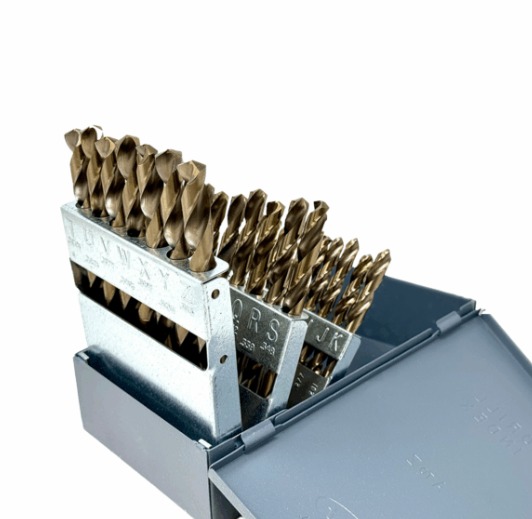
M42 cobalt drill bits contain approximately 8% cobalt, which improves their ability to maintain hardness at elevated temperatures. This property makes them useful for repeated drilling in difficult-to-machine metals.
Their increased hardness comes with reduced tolerance for bending. Secure workholding and controlled feed pressure help protect the cutting edges from chipping during operation.
Workshops that regularly handle stainless steel or heat-resistant alloys may benefit from keeping M42 bits in their most-used sizes. Proper cutting speeds and suitable cutting fluid remain important, regardless of the bit’s heat resistance.
Not every metalworking job requires the higher hot hardness of M42. When your workshop regularly moves between mild steel and stainless steel, M35 offers another option without introducing a harder, less forgiving cutting material.
M35 contains approximately 5% cobalt, helping the cutting edge retain hardness as drilling temperatures rise. Its composition also offers a useful balance of toughness and wear resistance, particularly when working conditions aren’t perfectly rigid.
That flexibility can benefit workshops handling smaller production runs or maintenance jobs involving different metal grades. Operators still need appropriate cutting speeds and consistent pressure to prevent premature wear.
If tougher metals appear occasionally in your workload, M35 may provide enough performance without requiring a separate M42 assortment.
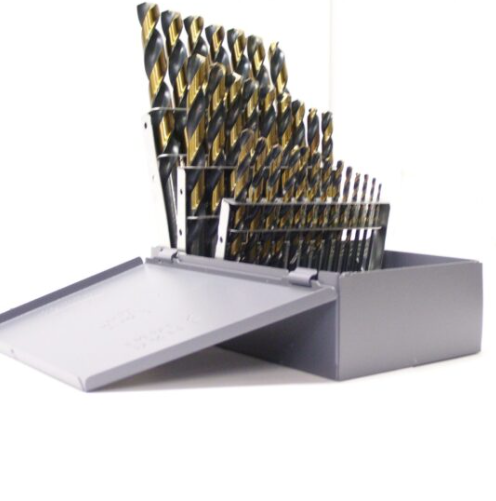
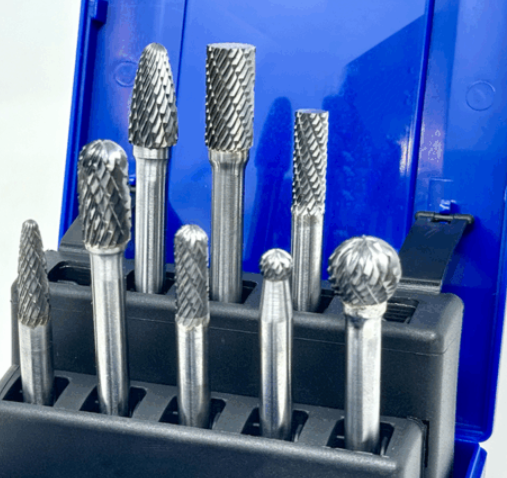
Solid carbide drill bits offer excellent wear resistance, making them useful for repeated drilling operations where consistent results matter.
Carbide maintains its cutting hardness under demanding conditions, but its rigidity comes with a limitation. Unlike HSS, carbide doesn’t tolerate much bending, and excessive vibration can damage the cutting edges.
For this reason, solid carbide performs best in stable machining setups with secure workholding. Proper machine alignment helps the drill maintain its cutting path and reduces the likelihood of chipping.
These bits can also perform well in abrasive materials when their cutting geometry suits the application.
Workshops that regularly perform precision machining may benefit from carbide sets, while general maintenance operations often favor the greater flexibility of steel-based drills.
Drill length influences how a bit behaves during cutting, particularly when the workpiece requires accurate hole placement.
Jobber-length drills offer a familiar general-purpose configuration with enough reach for many routine metalworking applications. Their proportions provide a reasonable balance between working length and rigidity.
You’ll find jobber-length bits in HSS and cobalt grades, letting you choose a cutting material that matches the metal without changing the drill’s overall dimensions.
They work well for mounting holes in steel brackets and other common fabrication tasks where the hole depth falls within the bit’s flute capacity. When drilling shallow holes that require tighter positional accuracy, however, a shorter drill may provide greater stability.
Screw machine drill bits, often called stub-length drills, have shorter bodies than standard jobber-length designs. Their compact dimensions help reduce deflection when the cutting edges enter the workpiece.
This difference matters when drilling shallow holes where even slight movement could affect placement. Shorter bits can maintain a steadier cutting path, particularly when the workpiece and equipment remain secure.
Their reduced length also makes them useful in machining setups with limited clearance between the spindle and workpiece.
However, screw machine drills offer less reach than longer configurations. Their flute length limits the depth they can drill while clearing chips effectively. For workshops that frequently machine smaller components, a stub-length assortment can complement standard jobber-length drills.
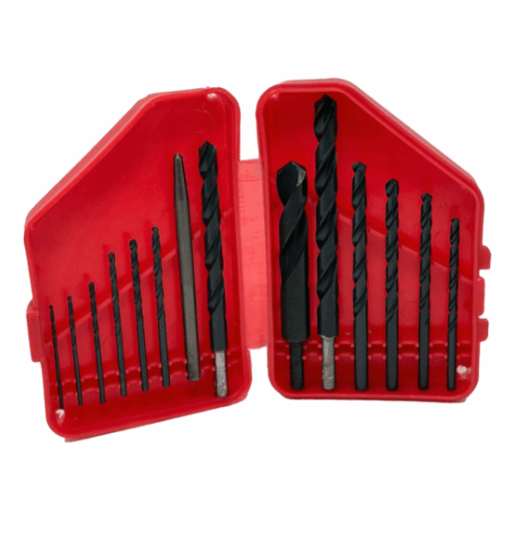
Choosing the correct diameter matters when preparing holes for fasteners or threaded components. Standard fractional sizes cover many applications, but certain operations require dimensions that fall between common increments.
Numbered and letter-size drills provide additional diameter choices, giving machinists greater flexibility when a specific hole size matters.
Before tapping, consult the tap-drill chart for the thread specification. The wrong diameter can impair engagement and complicate tapping. Workshops that often make threaded parts may keep these sizes with their general-purpose assortments.
Some drilling locations sit beyond the reach of ordinary jobber-length bits. Aircraft extension drills address this problem through their longer overall dimensions.
Their extended bodies allow operators to reach recessed areas or drill through assemblies where surrounding components restrict access.
However, the added length makes these bits more susceptible to bending. Maintaining alignment and controlling cutting pressure helps limit deflection, particularly with smaller diameters.
It’s also worth distinguishing overall length from flute length. Many aircraft extension drills provide greater reach without increasing the flute length enough for substantially deeper holes.
Before selecting an extended-length set, consider the distance to the drilling location and the required hole depth. Both measurements affect whether the bit suits the application.
The essential drill bit sets every workshop should have depend on the materials you drill and the accuracy your work requires. General-purpose HSS handles many routine applications, while cobalt and carbide address more demanding cutting conditions.
Consider which diameters you use most frequently and where your existing bits struggle. A useful assortment should support your regular workload without creating unnecessary overlap.
Drill Bit Warehouse carries drill bit sets for general metalworking and specialized drilling applications. Browse our selection to find cutting materials and sizes that fit your workshop’s needs.
Share this article